
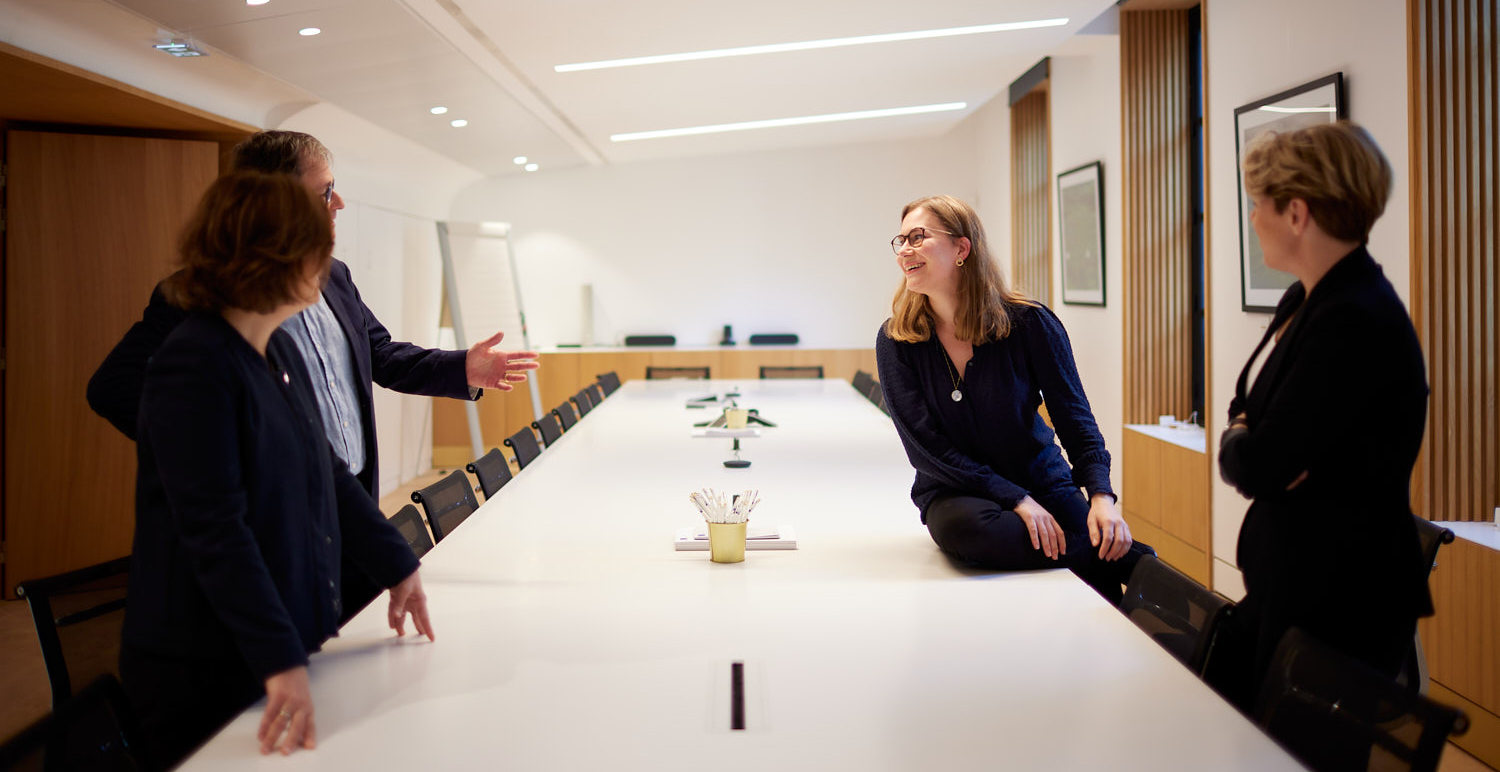
Agathe is a patent litigator who turns urgency into a plan: calm tone, sharp priorities, real momentum, and yes, the occasional well-timed joke when everyone’s running on fumes


Focus
- Aerospace, automotive & marine
- Arbitration & Mediation
- Biotechnology & Biologics
- Chemicals
- Electronics, computers, software & semiconductors
- Industrial equipment & Manufacturing
- Medical devices
- Patents
- Pharmaceuticals
- Retail & Consumer goods
- Telecommunications & Networks
- Unfair competition & Trade secrets
- Unified Patent Court (UPC)

Toetreding
2013Q:
Conflict and problem-solving: where did it start?
In a big, close family. Small frictions were normal, and I learned that things move faster when you address them early, with dialogue and accountability. Conflict isn’t a failure; it’s a signal. Understand what the other person is struggling with, and you can often get both sides to a better place… on both banks of the river.
Q:
Your first big “this is serious” case?
Not a hearing, a sprawling file I inherited. One issue looked unclear because the law had changed several times across different periods. I could have relied on what was already filed, but I dug in until I fully understood it and found a stronger argument. It proved decisive. The habit stuck: go deeper…and don’t let go.
Q:
When a client calls and it’s truly urgent, what’s your first move?
Be useful fast. I listen first, lower the temperature, identify the pressure points, then translate legal language into practical consequences. The goal is that the client knows what it means in the real world, not only on paper.
Q:
“Being useful” in multi-jurisdiction disputes: what does that mean?
Remembering you’re one piece of a bigger puzzle. The goal isn’t to win your local point at any cost, but to support the overall strategy, including compromises when needed. And still working the file hard, because the best local point can travel.
Q:
When the team is tired, what kind of colleague are you?
Trust first: people do their best work when they feel trusted. Then clarity: priorities, direction, no guessing. And I’m a believer in a well-timed joke, it’s not in the Code of Civil Procedure, but it helps.
Q:
Your non-law ritual?
Hosting dinners at home for family and friends. Simple food, a nicely set table. I want my children to see that conviviality matters: we work hard, and then we take care of the people around us.