

Withdrawal rates
1. Status of actions in first instance
1.1 Overview
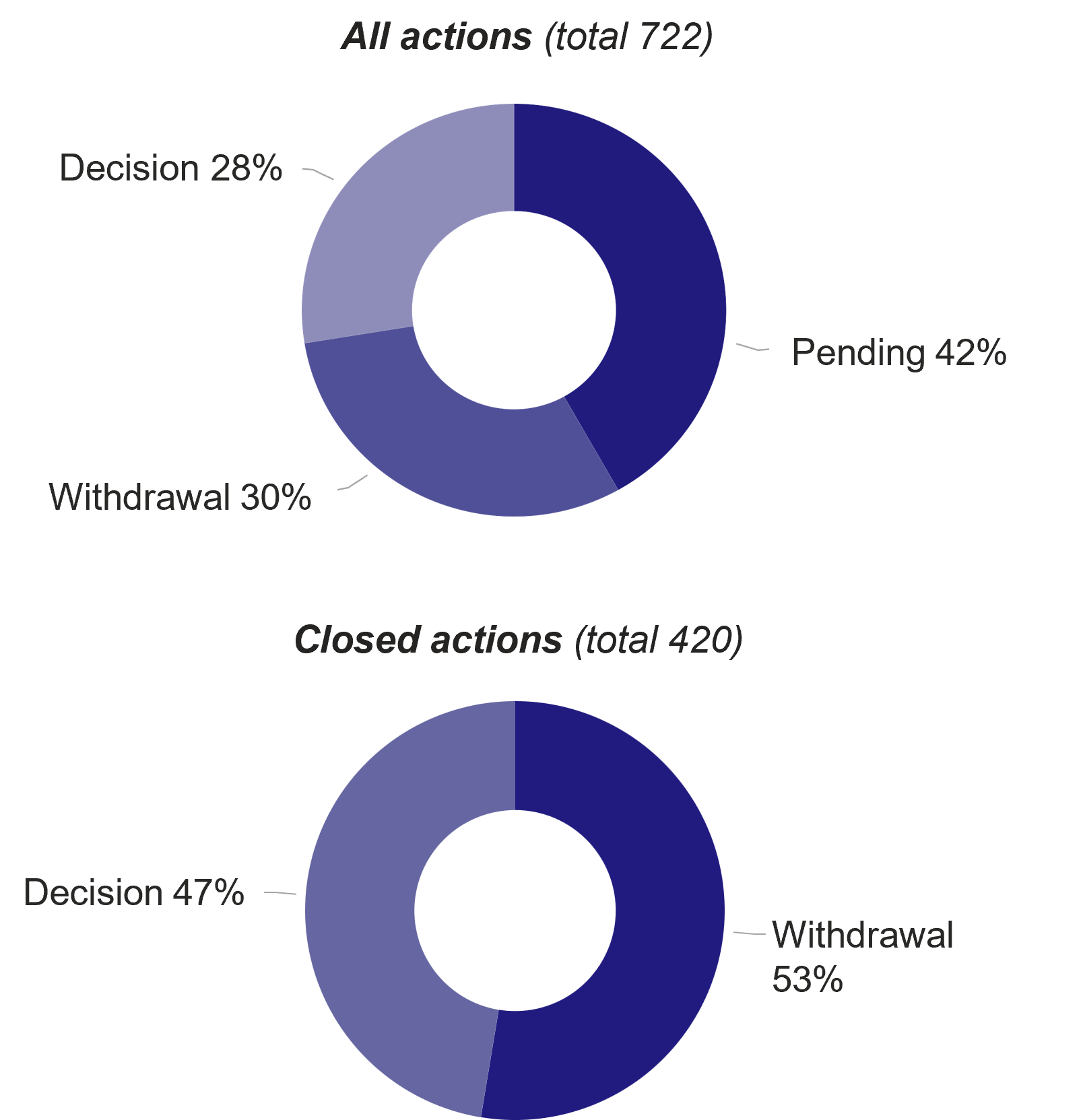
The Court of First Instance has received 722 cases that are either infringement actions, revocation actions, declarations for non-infringement or applications for provisional measures. Of these, 42% cases remained pending at the date of collection, 30% had been withdrawn and 28% had resulted in a decision. When only closed actions are examined, withdrawals account for 53% of all concluded proceedings and decisions account for 47%. In other words, the withdrawal rate is 53%.
The figures indicate that slightly more cases end through withdrawal than that they lead to a decision by the Court of First Instance. The data demonstrates that withdrawals and settlements before a substantive decision, play a substantial role in UPC litigation practice.
1.2 Withdrawal rates by action type
Withdrawal rates vary significantly depending on the type of action. Infringement actions represent the largest volume of closed proceedings. Of these, 171 (64%) actions were withdrawn and 96 (36%) resulted in a decision.
Applications for provisional measures display the opposite pattern. Eighty-one percent of closed applications resulted in a decision, and only 19% were withdrawn. This lower withdrawal rate of interim measures may result from the simple shorter duration of the proceedings, and potentially from the difference in nature of the proceedings which are for example generally not considered appropriate for licensing disputes.
Revocation actions were more evenly distributed. 47% percent resulted in a decision and 53% were withdrawn. The balanced outcomes indicates that revocation proceedings exhibit materially different procedural dynamics from infringement actions.
Declarations of non‑infringement represent the smallest category. All identified closed actions in the dataset were withdrawn, with no decision rendered by the date of collection of the data.
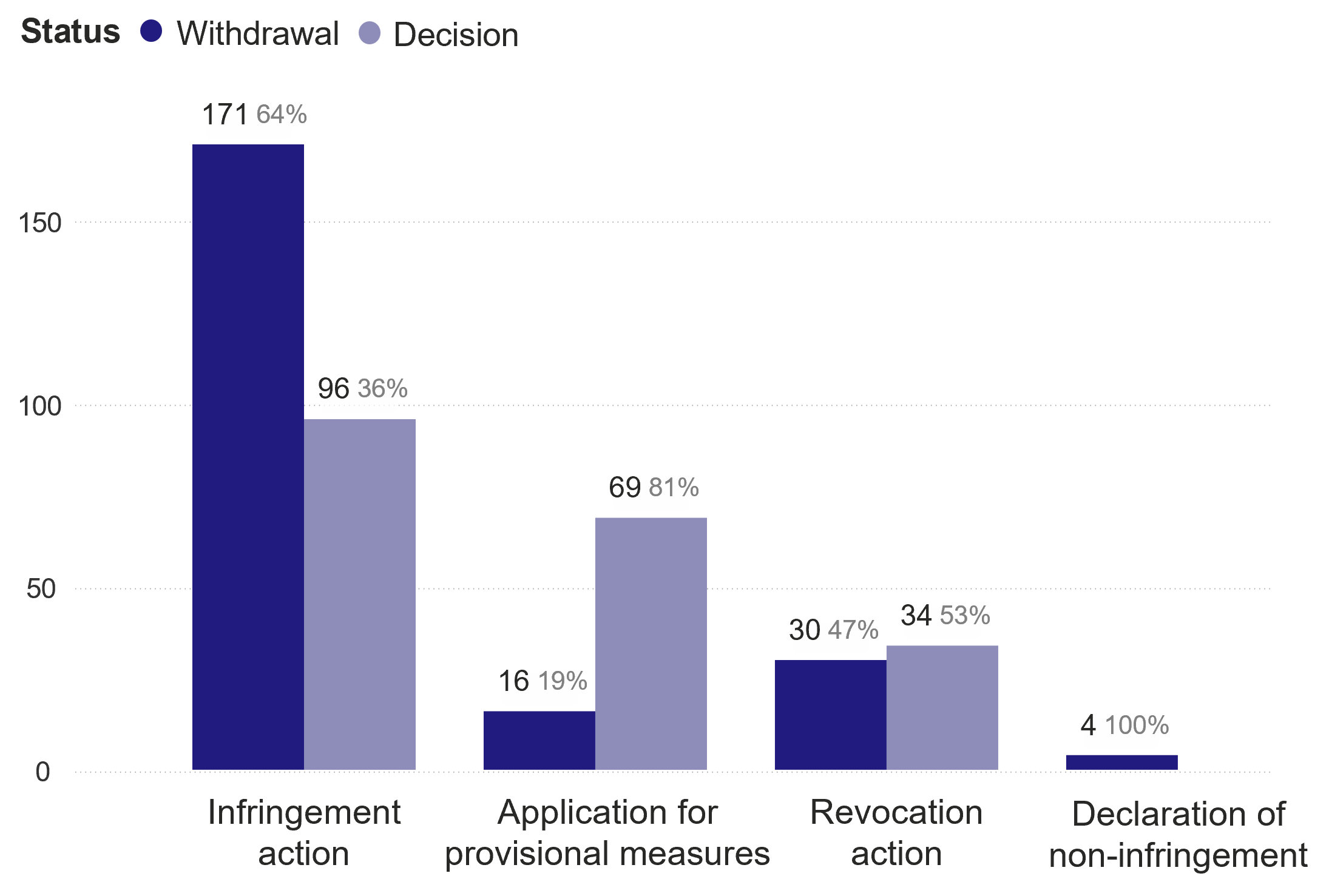
Figure 1. Withdrawal rates by type of proceeding in first instance
2. Local and Regional Divisions
2.1 Infringement actions
Substantial differences are visible across local and regional divisions. Munich recorded the highest number of withdrawn infringement actions with a withdrawal rate of 77% (and a decision rate of 23%). Hamburg and Mannheim showed similar patterns, with withdrawals representing 74% and 67% of the cases. Of the German local divisions, Düsseldorf records the lowest withdrawal rate, with still a percentage of 57%
Paris and The Hague also recorded significant activity. Paris displayed a withdrawal rate of 40%, while The Hague with 50% represented one of the lower withdrawal rates among the larger divisions.
These figures should be interpreted with caution, as the relatively small sample size means that individual proceedings can significantly influence the percentages.
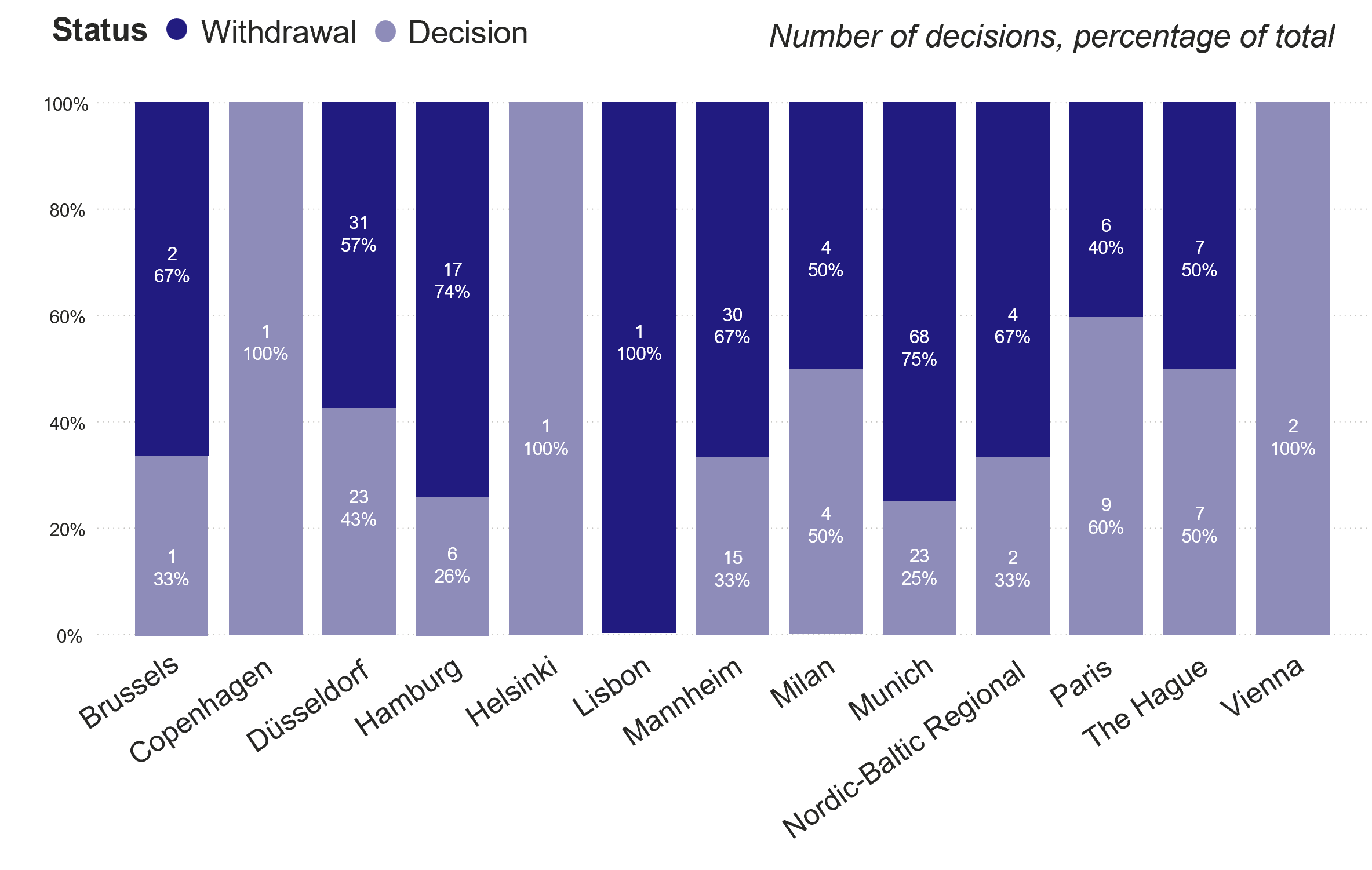
Figure 2. Withdrawal rates for infringement actions by Local Division.
2.2 Applications for provisional measures
When it comes to applications for provisional measures, the Local Division Munich records the highest absolute number of decisions (16) but also the highest withdrawal rate (30%). Düsseldorf records a withdrawal rate of 17% (3 out of 18), while the Local Division The Hague has also handled a considerable number of applications for provisional measures (10) without any action being withdrawn prior to a decision. The data indicate that applications for provisional measures are more likely to proceed to a decision than to be withdrawn.
Again, the results for divisions with only a few concluded applications should be interpreted with caution, as the limited sample size does not permit reliable conclusions to be drawn from the reported percentages.
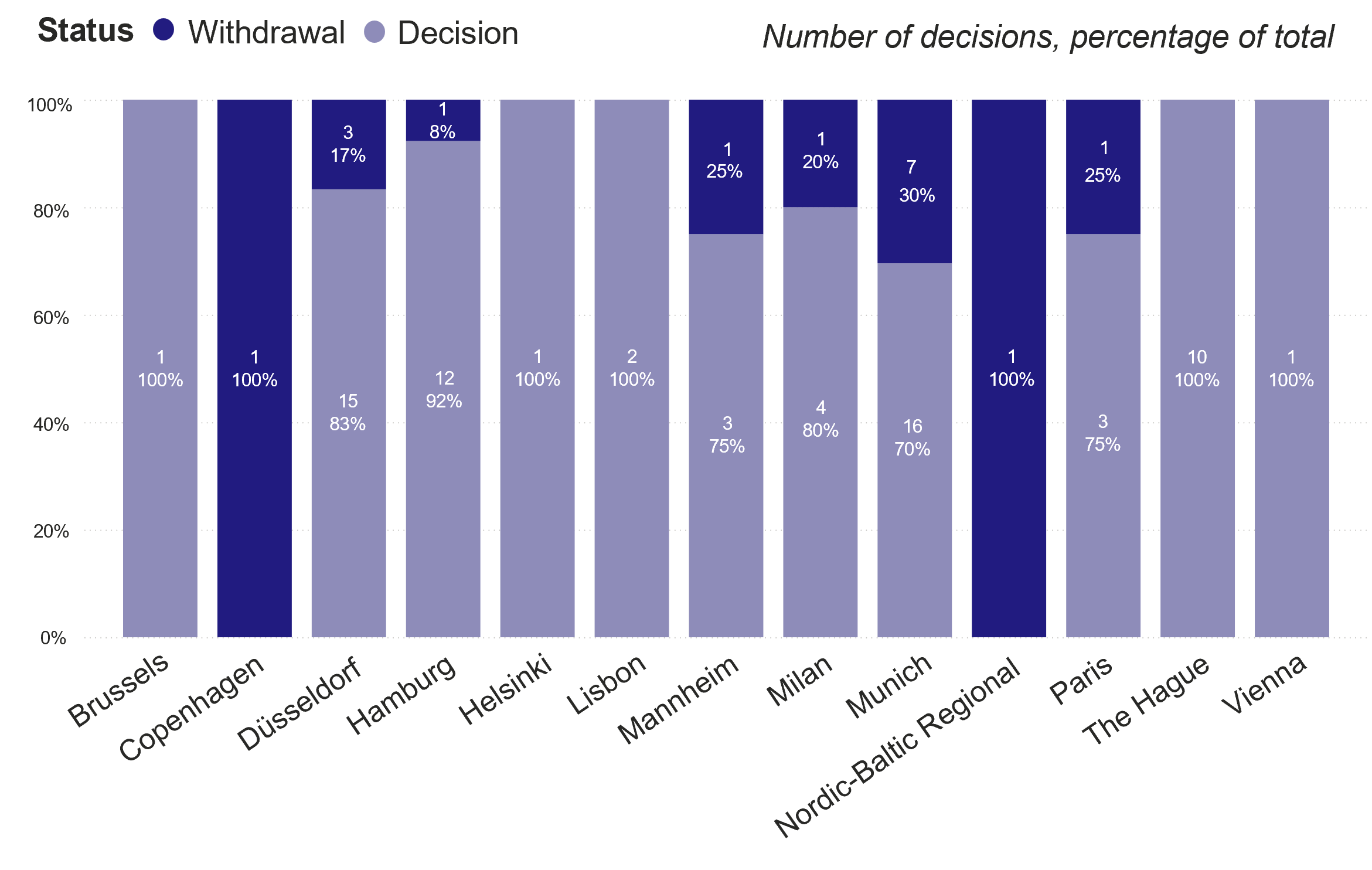
Figure 3. Withdrawal rates for provisional measures by Local Division.
3. Central Divisions
3.1 Revocation actions
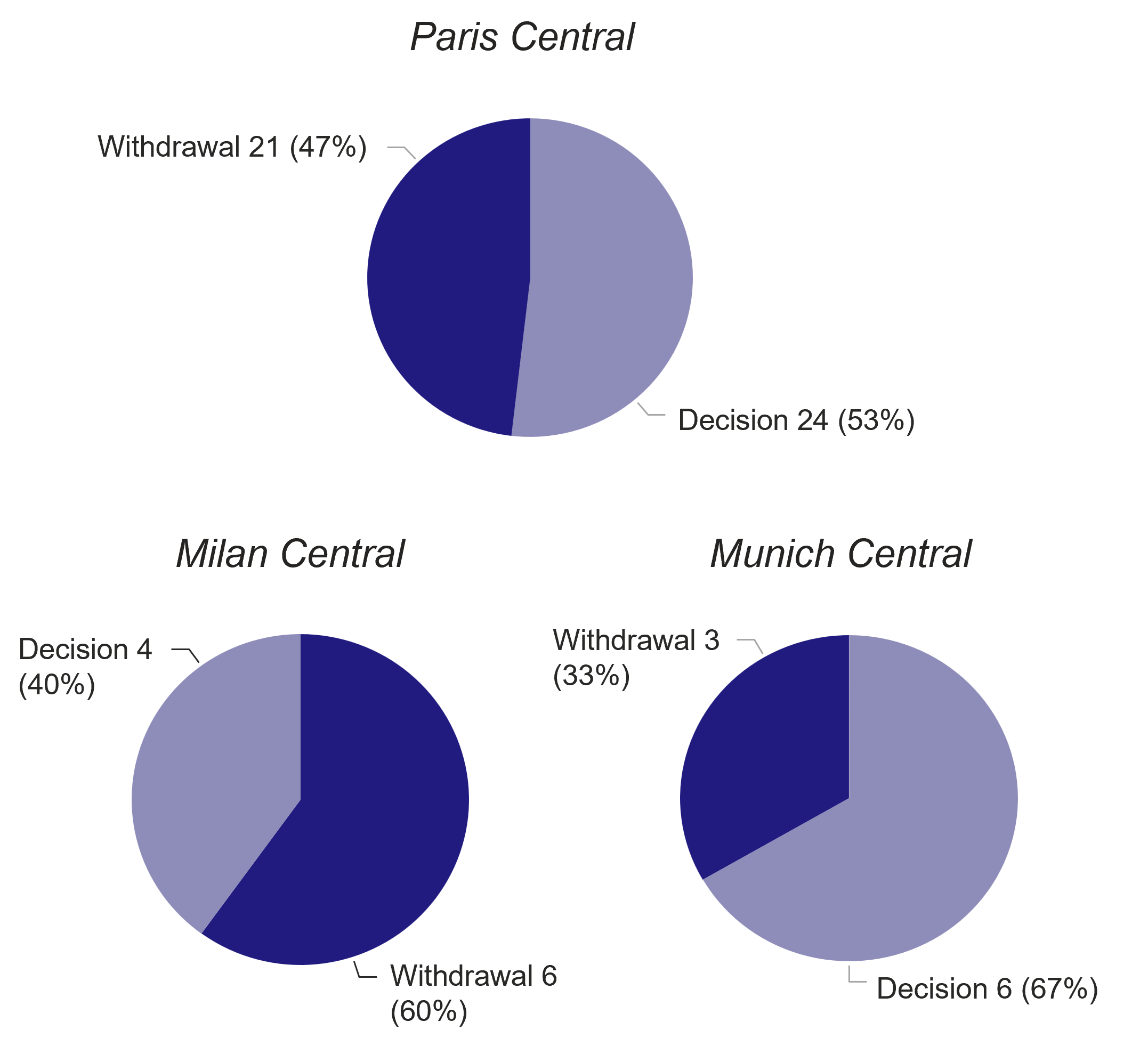
The three Central Divisions show varied patterns in the resolution of revocation actions. Paris Central recorded the highest number of revocation actions, with 24 decisions and 21 withdrawals. Out of these totals, decisions accounted for 53% of concluded proceedings and withdrawals for 47%.
Munich Central exhibited a lower withdrawal rate. Two thirds of concluded proceedings resulted in a decision and one third were withdrawn. Milan Central showed the opposite pattern, with withdrawals accounting for 60% of concluded proceedings and decisions accounting for 40%.
4. Withdrawal rates by industry in first instance infringement actions
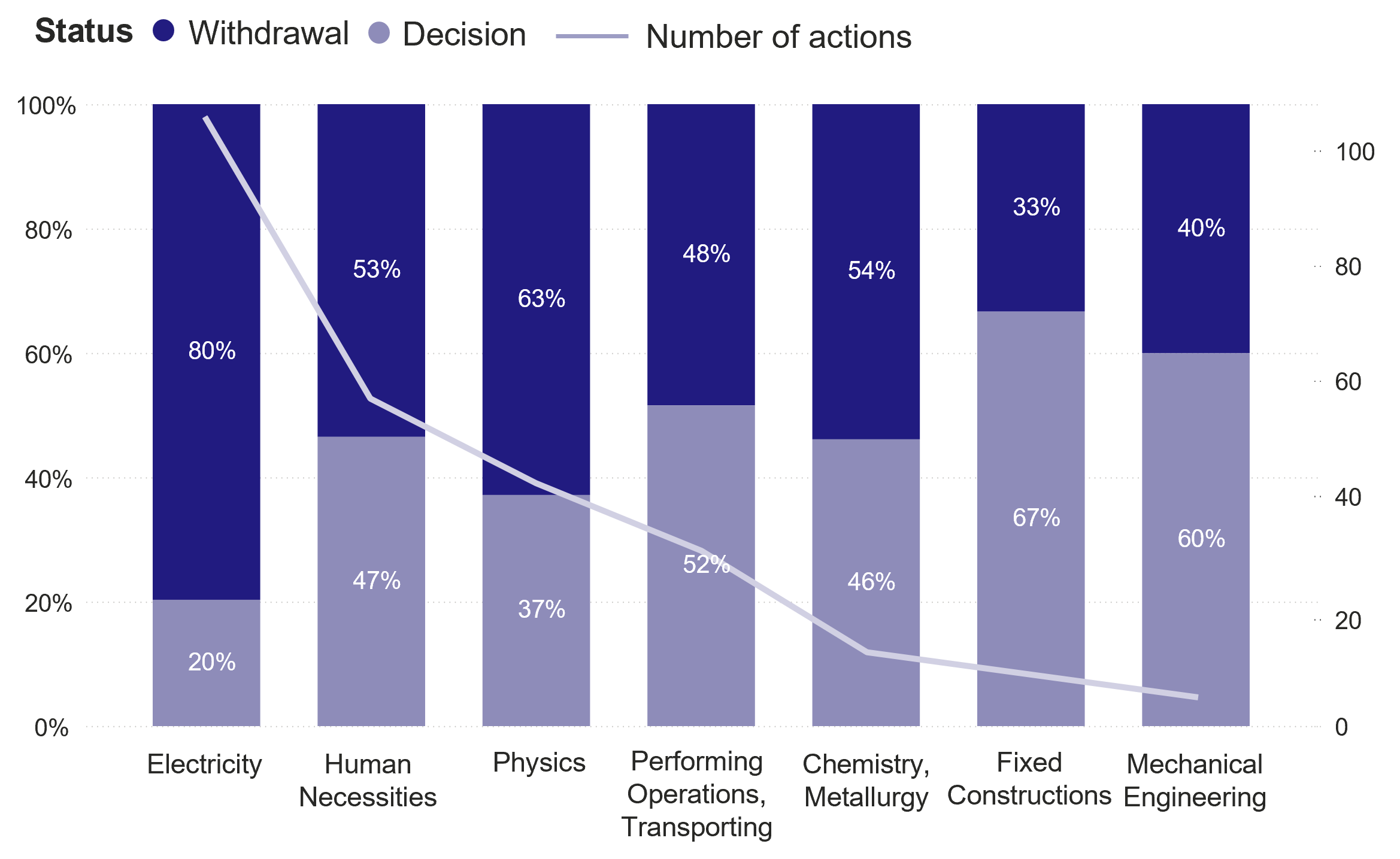
Industry-specific analysis of infringement actions shows variation in the proportion of actions withdrawn before a decision.
Electricity-related disputes generated the largest volume of infringement actions and also recorded the highest withdrawal rate, with approximately 80% of concluded actions ending in withdrawal. Physics-related cases exhibited a withdrawal rate of 63%, while human necessities, performing operations and chemistry showed an almost equal distribution between withdrawals and decisions.
By contrast, fixed constructions and mechanical engineering recorded the lowest withdrawal rates, with 67% and 60% of concluded actions resulting in a decision respectively.
These differences may reflect variations in commercial and litigation dynamics across industries. The high withdrawal rate in the electricity sector may be influenced by standardisation and licensing frameworks. Where standard-essential patents (SEPs) are involved, litigation may form part of a broader licensing negotiation and increase the likelihood that proceedings are withdrawn following the conclusion of a commercial agreement.
5. Status of actions on appeal
5.1 Methodology and scope
The dataset for the Court of Appeal focused on appeals on infringement and revocation actions, declarations for non-infringement and applications for provisional measures under Rule 220.1 of the UPC Rules of Procedure (RoP). For pending cases, all publicly identified appeals under Rule 220.1 RoP were included.
5.2 Status of actions
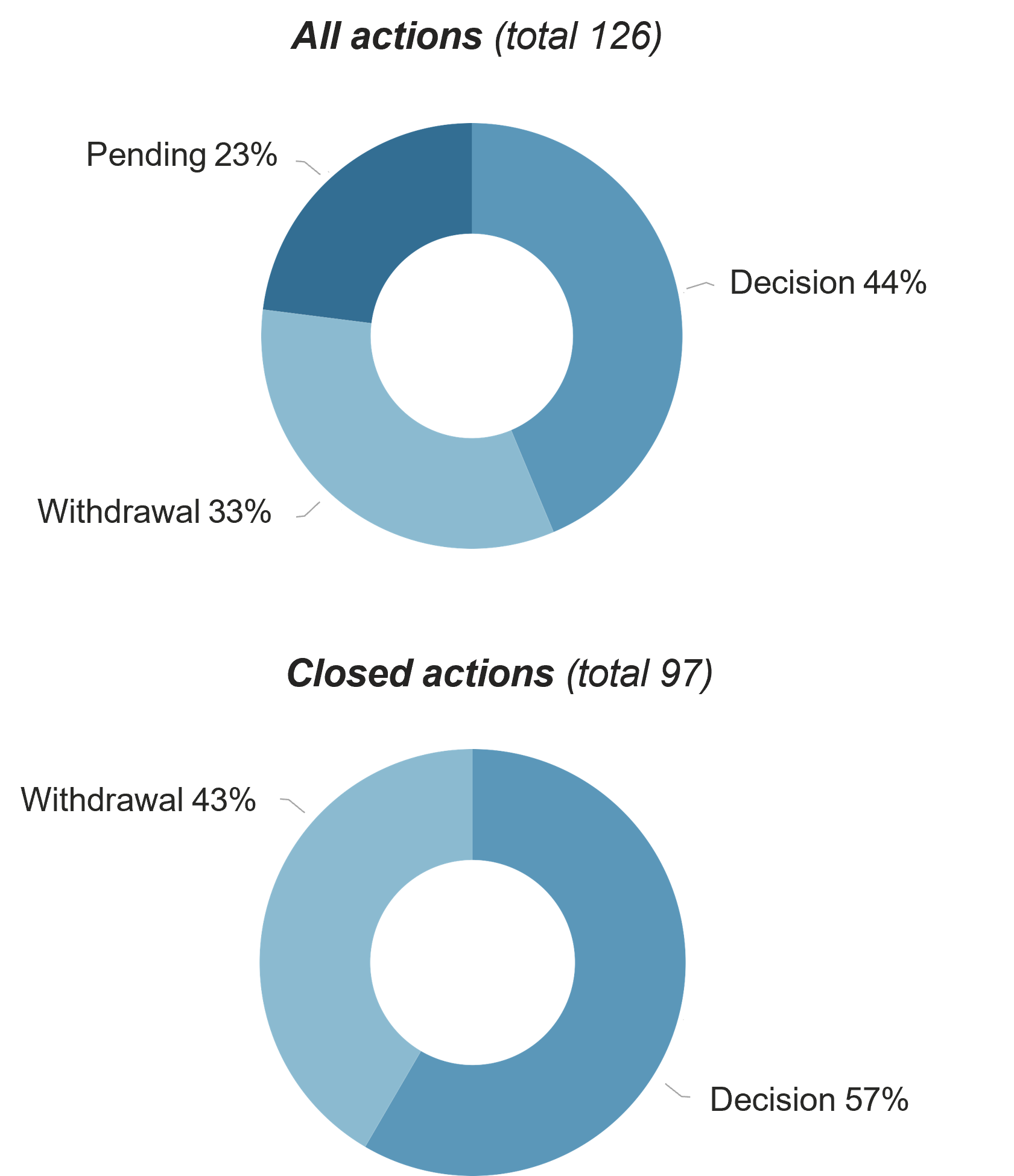
The Court of Appeal dataset contains 126 actions. Twenty‑three percent remained pending at the date of collection, 33% had been withdrawn and 44% had resulted in a decision. When only closed actions are examined, decisions account for 57% of outcomes and withdrawals account for 43%.
Compared with the Court of First Instance, the Court of Appeal shows a lower withdrawal rate and a higher proportion of decisions. Appeals therefore appear more likely to proceed to a substantive decision once initiated.
5.3 Withdrawal rates by action type
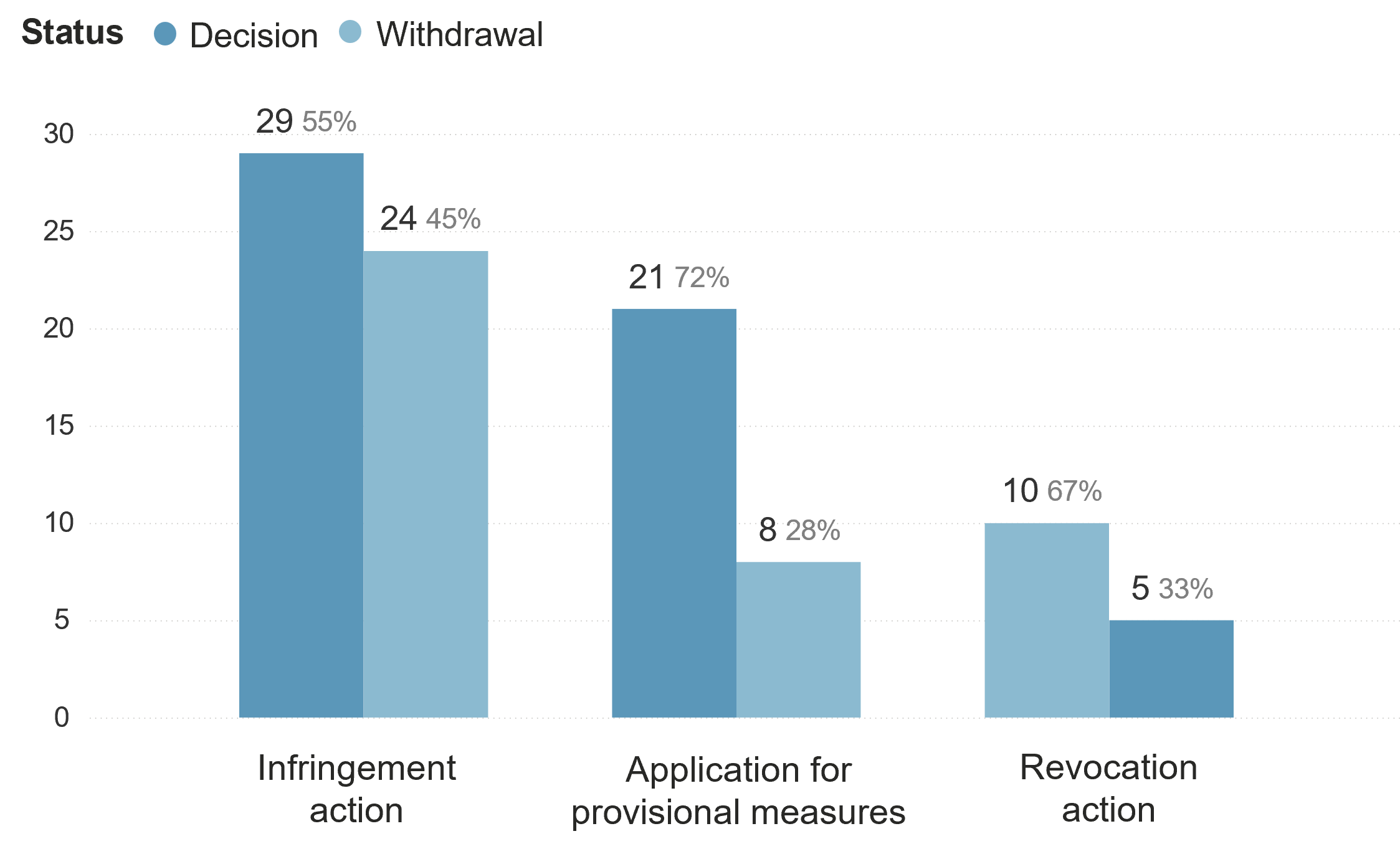
The highest decision rate was observed in applications for provisional measures, where approximately 72% of concluded appeals resulted in a decision. Infringement appeals also displayed a majority of decisions, with 55% proceeding to judgment.
Revocation appeals were more likely to be withdrawn than any other principal appeal category. Approximately two thirds of concluded proceedings ended in withdrawal, while only one third resulted in a decision.
6. Withdrawal rates by industry in appeals of infringement actions
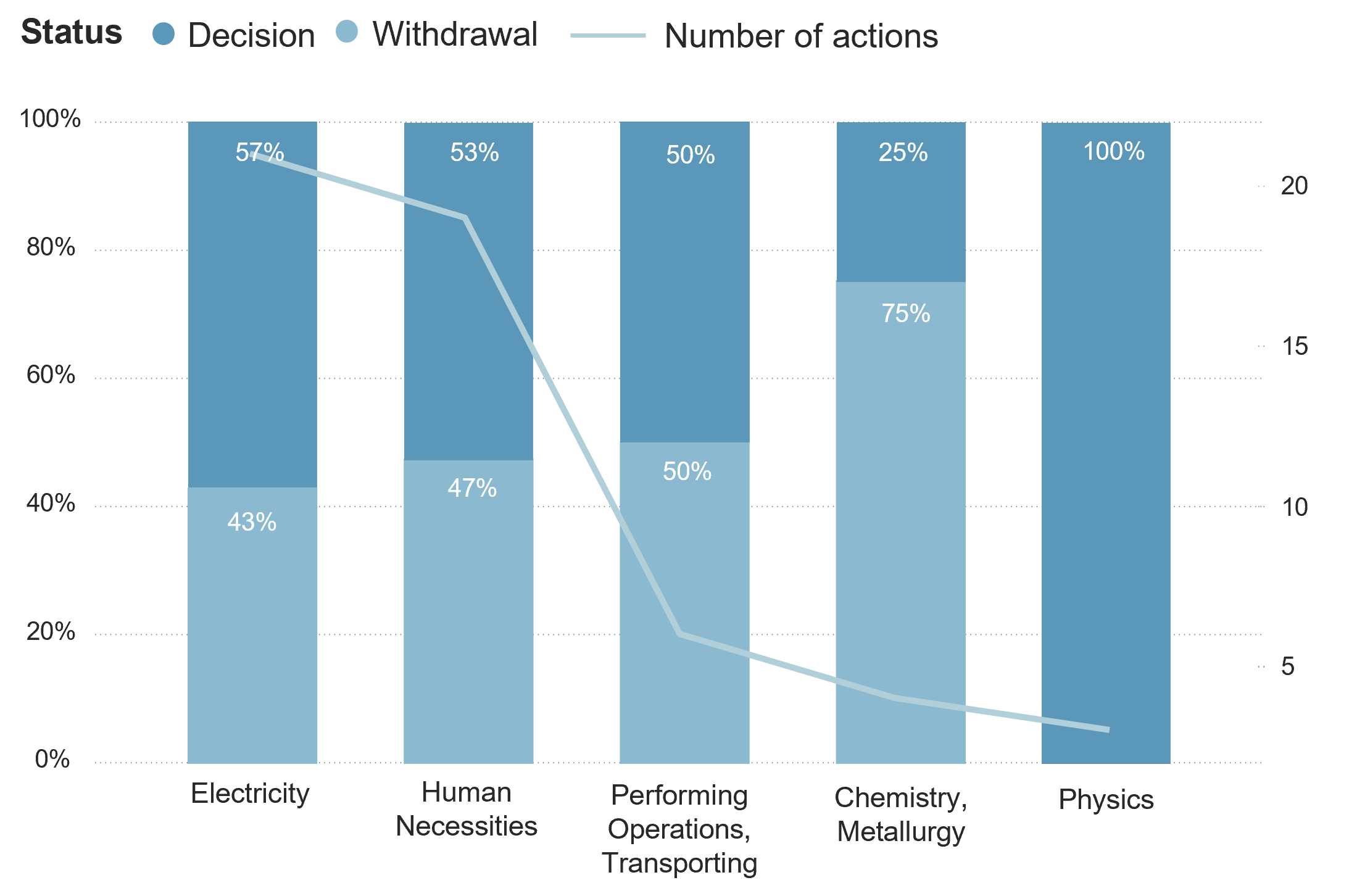
At the Court of Appeal, industry-specific withdrawal rates remain varied. Electricity sector produced the largest volume of publicly recorded appealed actions on infringement decisions (21 appeals) and displayed a higher rate for decisions (57%). Human necessities (53%) and performing operations (50%) followed with an almost equal distribution for decisions and withdrawals.
Physics recorded a complete decision rate in the identified dataset, with no withdrawals among concluded actions. Chemistry/Metallurgy recorded a materially higher withdrawal rate than the principal technology sectors.
Several sectors are represented by only a limited number of concluded appeals. As a result, the percentages reported for physics and chemistry, which are based on three and four proceedings respectively, should not be regarded as indicative of broader industry trends.
7. Discussion and conclusions
The data indicates that withdrawals are a significant feature of UPC litigation. More than half of all closed proceedings before the Court of First Instance concluded through withdrawal rather than a judicial decision. Infringement actions exhibited comparatively higher withdrawal rates, whereas applications for provisional measures were more likely to proceed to a decision. Differences are also visible across divisions. The larger divisions generally recorded higher proportions of withdrawals, particularly the German Local Divisions.
At appellate level, decisions accounted for a larger share of concluded proceedings than at first instance. This suggests that once a dispute progresses to the Court of Appeal, parties are more likely than not to pursue a substantive outcome.
Industry-specific analysis of infringement actions reveals further differences. Electricity generated the highest volume of disputes and one of the highest proportions of decisions. By contrast, sectors with lower litigation volumes generally recorded higher decision rates, although the limited number of cases in some industries precludes drawing broader conclusions.
Data Note
The statistics in this report are derived from publicly available decisions on the UPC Registry as compiled in May 2026. All data is collected and published by HOYNG ROKH MONEGIER.
.